
70+ apple cultivars worthy of conservation
Gloucestershire’s apple heritage
The best way to conserve a particular variety is to plant it … in as many different locations as possible
Available trees
We have most of Gloucestershire’s apple varieties available for sale, sold as bare-rooted trees, for planting between early December and late March each year … but have a limited number of each variety, so whether you are interested in planting a tree or two, or an entire orchard, it may be prudent to reserve the particular varieties in which you are interested.
The trees are available on either M25 (vigorous) or MM106 (semi-vigorous) rootstocks.
M25 will grow to over 6 metres and should be planted at no less than 8 metre intervals
MM106 will grow to 4 to 5 metres high and should be planted at no less than 5 to 6 metre intervals
For full details of the varieties we have available and on which rootstocks, please complete the form below and we’ll email you up-to-date information about what is available.
Spotlight on just a few of Gloucestershire’s apple cultivars
Cambridge Quoining
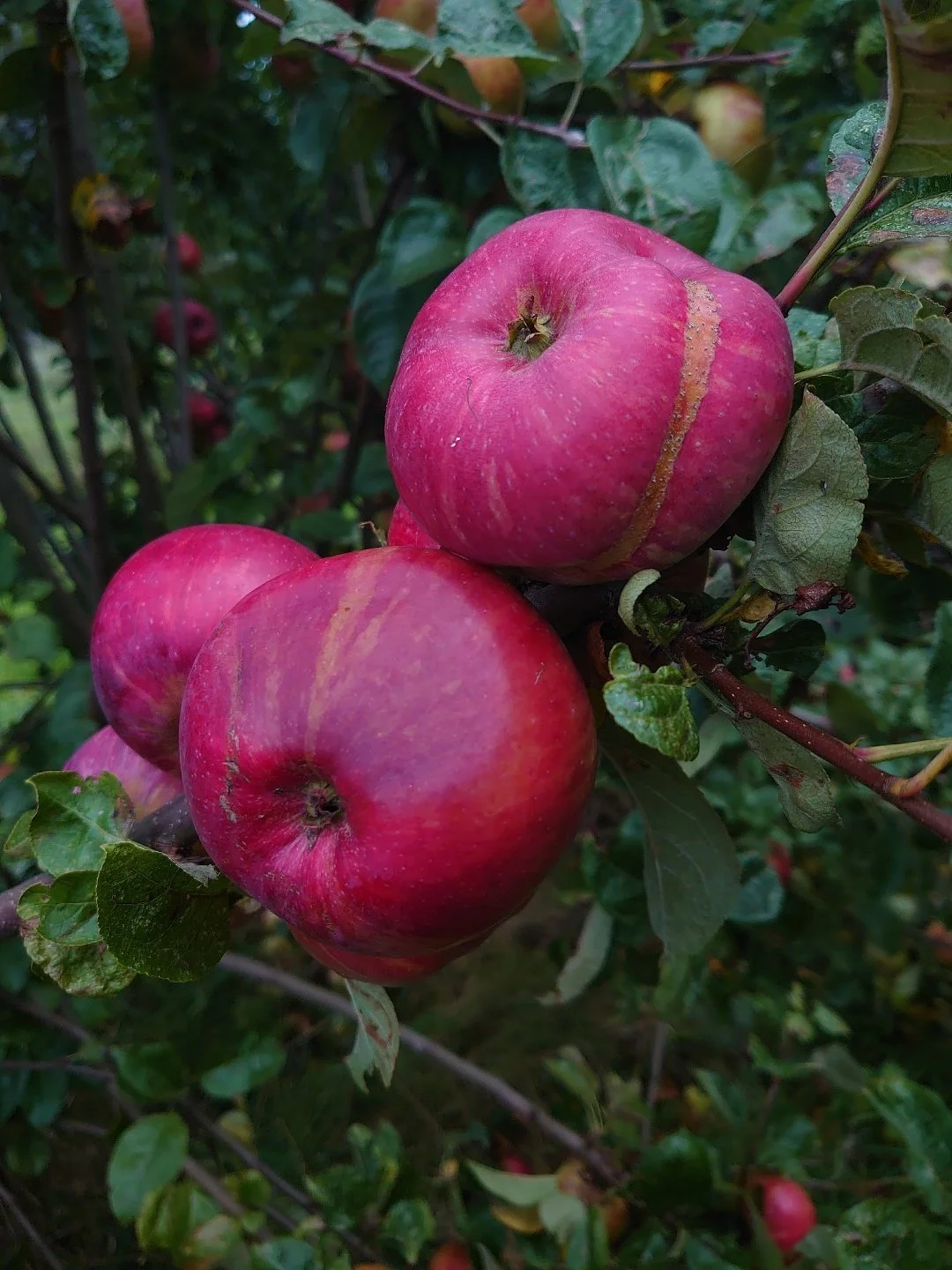
Named after the hamlet south of Gloucester, rather than the Fenland capital that plays host to the world’s finest university, the apple’s descriptive name may derive from the French ‘coin’ (corner), a reference to the apple’s distinctive angular, ribbed appearance.
The fruit itself is prone to twinning, a result of its short stalk; two apples fruiting on the same spur have no choice but to graft together in order to grow.
Fruit was submitted to Long Ashton cider competitions between 1903 - 1929 and was classified as a sharp cider apple i.e. one with high acidity and low tannin.
Hunt’s Duke of Gloucester
Raised by Dr. Fry of Gloucester, then introduced by T. Hunt of Stratford-upon-Avon, in 1820.
There may be a connection with Fry’s chocolate manufacturer of Bristol, makers of the world’s first chocolate bar, Fry’s Chocolate Cream (1847), as well as Britain’s first Easter egg (1873). Joseph Fry founded the business in 1728, his wife Anna ran the business after he died, together with their son, another Joseph, and when she died Joseph (jnr.) went into partnership with a Dr. Hunt, and it may be these two who are responsible for this apple.
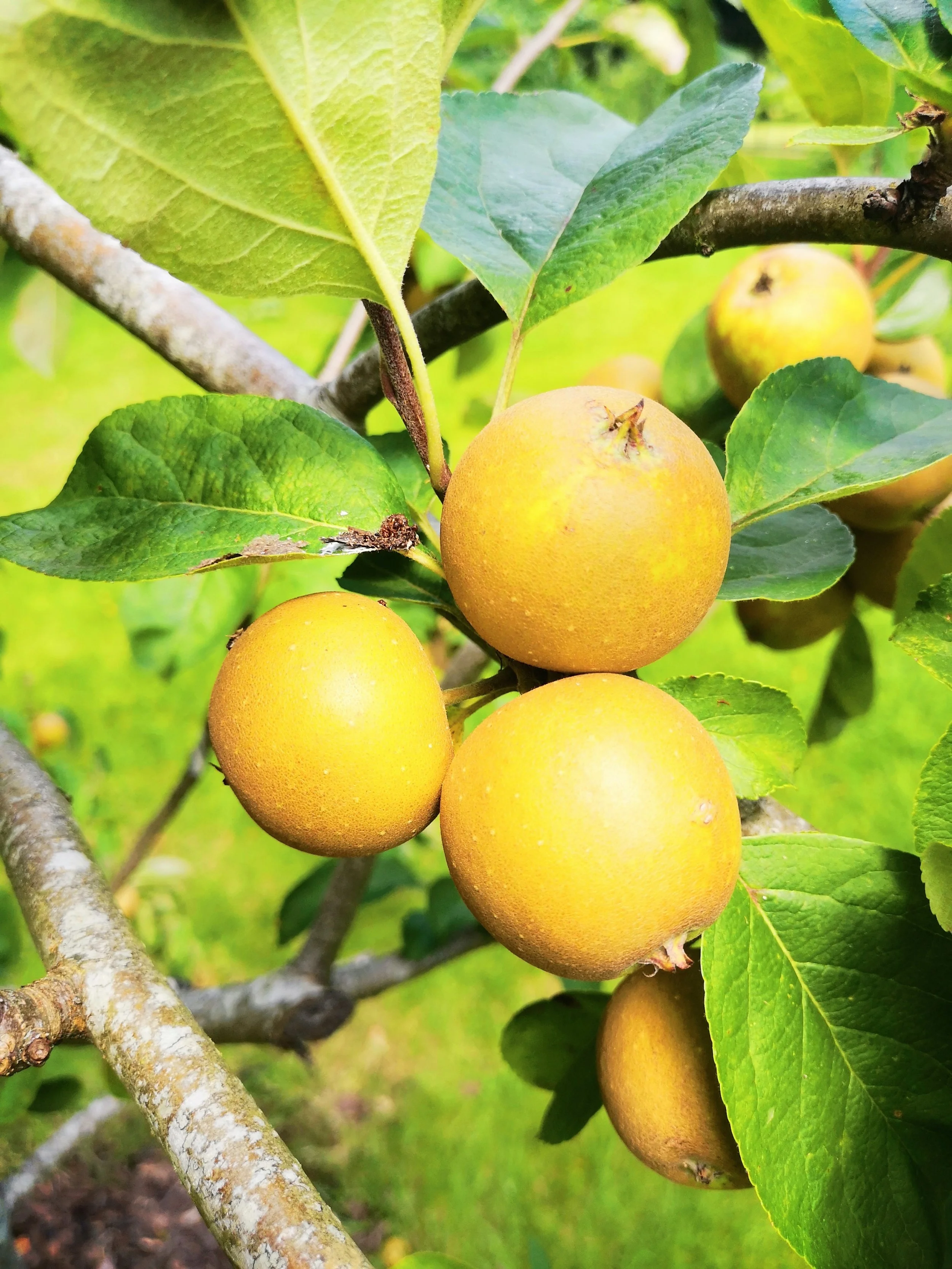
Foxwhelp
Possibly Gloucestershire’s oldest apple, first mentioned by Ralph Austin in 1653, although the first tree was believed to have been planted in 1609.
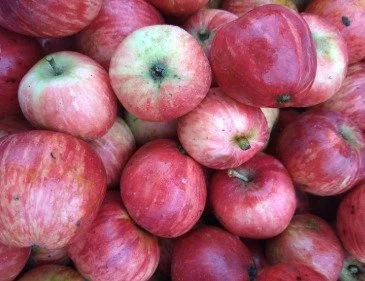
The apple itself is a famously sharp bittersharp cider apple, now widely planted in Herefordshire and made famous by that county’s cider-makers. The skin is yellow, beautifully striped with bright crimson, so is readily identifiable.
How it came to be called Foxwhelp is a mystery; the tree may have been close to a fox’s den, a foxhunter may have discovered it, even because the eye of a fruit resembles a fox cub. Ultimately, it came to be so called thanks to the native wit and wisdom of Gloucestershire’s citizenry, over 400 years ago.
The complete and correct list of the apple varieties that come from Gloucestershire changes from time to time, as a result of new discoveries and DNA testing. At the time of writing (July 2026) we believe this is the full list:
Apples: total 70 different cultivars
Ampney Red, Ansell, Arlingham Schoolboys, Ashmead’s Kernel, Barnet’s Beauty, Bedminster Pippin, Box Kernel, Brown French, Cambridge Quoining, Chapman’s Delight, Chaxhill Red, Corse Hill, Dent’s Favourite, Dymock Red, Elmore Pippin, Fawkes’ Kernel, Flower of the West, Fon’s Spring, Foxwhelp, Gilliflower of Gloucester, Gloucester Royal, Gloucestershire Underleaf, Gypsy Red, Hagloe Crab, Hard Knock, Hens’ Turds, Holbrook, Hunt’s Duke of Gloucester, Jenny Lind, Jill Jefferies, Josey, Kempley Red, Kenchy Pippin, Kernal Underleaf, Kill-Boys, King Apple (Martell), Leathercoat, Lemon Roy, Lodgemore Nonpareil, Longney Russet, Longstalk, Lydney Kernel, Martin’s Kernal, Molly Kernel, Northland Seedling, Old Tankard, Over Apple, Overleaf, Overton Red, Pear Box, Pedington Brandy, Puckrupp Pippin, Red Styre, Reynold’s Crab, Rhead’s Reinette, Rock Kernel, Severn Bank, Shopground Kernal, Siddington Russet, Stantway Kernel, Streaked Blakeney, Sugar Pippin (Martell), Taynton Codlin, Transparent Codlin (Martell), Tupstones (Hagloe Crab (Phelps)), Upright Styre, Welsh Druid, Wheeler’s Russet of Gloucestershire, Wick White Styre, Yellow Willy.
The complete and correct list of the plum varieties that come from Gloucestershire and / or the local vicinity also changes from time to time but the picture is rather more complex, because DNA testing of the Prunus genus has yet to be established, so identification is based wholly on the morphology of the fruit.
Plums: total 22different varieties
Barley, Blaisdon Red, Bristol, Dymock Red, Chartist Victoria, Damascene, Damson Plum, Frampton Magnum (aka Winterbourne Magnum), Gloucestershire Violet, Groves Late Victoria, Jacob, Johnnie Moor (which is most likley to be the same as the Jimmy Moore Plum), Michaelmas Damson, Old Pruin, Rodley Blackjack, Rowles Pruin, Shit Smock, Smith’s Pruin, Sweet Damson, Victor Christian, Warwickshire Drooper, Yellow Egg